
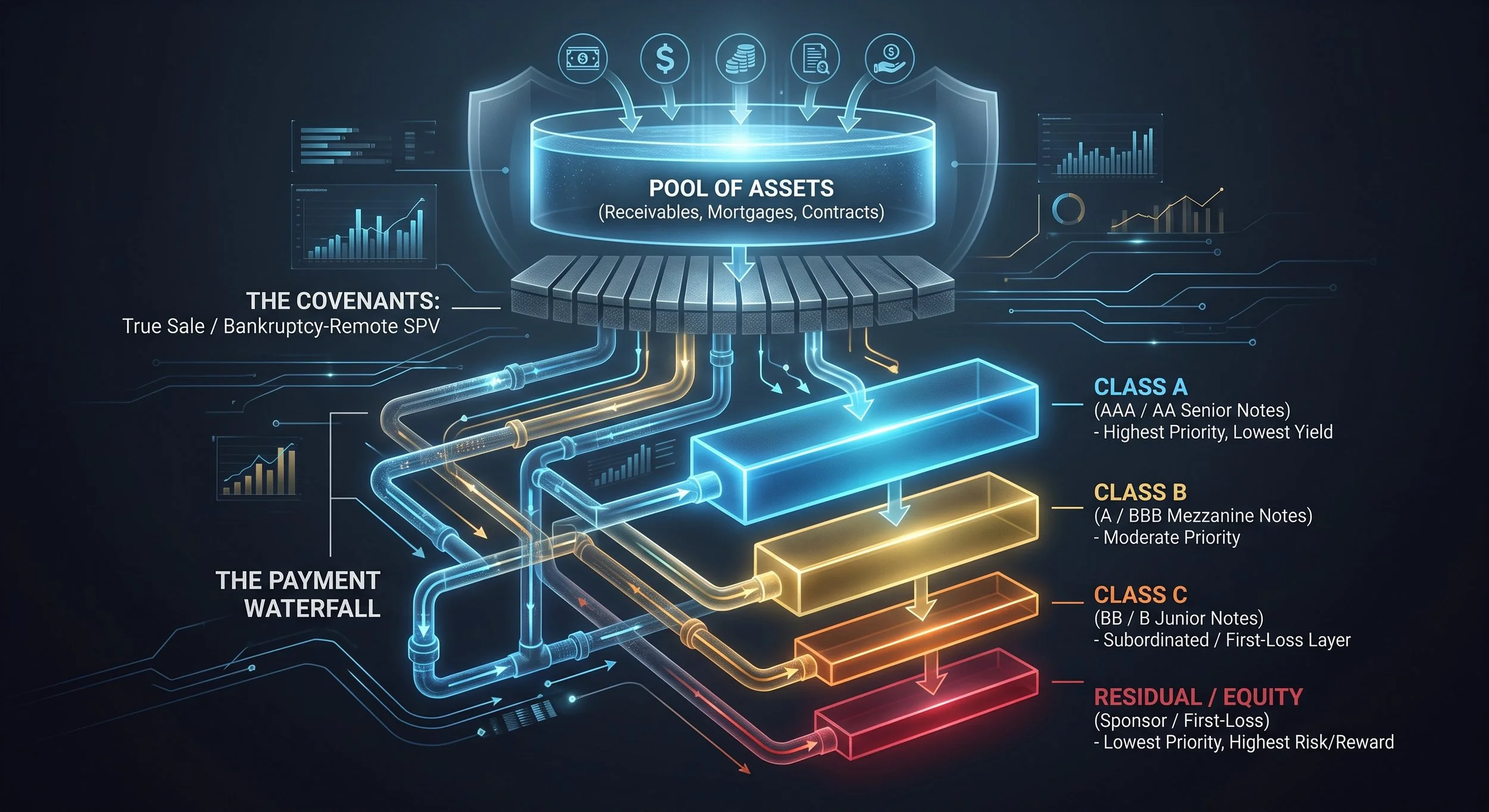
Structured Finance: The Institutional Guide to Capital Stack Architecture, Securitization, and Risk Isolation
Structured finance bypasses traditional balance-sheet lending to isolate risk, lower the blended cost of capital, and optimize liquidity for complex corporate assets and large-scale projects. This executive guide breaks down the core architecture used by institutional CFOs and treasurers: bankruptcy-remote SPVs, the legal mechanics of the True Sale doctrine, multi-tier tranching waterfalls, credit enhancement strategies, and capital stack optimization.

Demystifying the 90% LTC Capital Stack: Institutional Solutions for Mega-Projects
For ultra-high-net-worth developers executing $165M+ mega-projects, traditional depository banks present a rigid structural ceiling—often capping construction facilities at 60% to 65% LTC. This forces sponsors to syndicate expensive preferred equity, surrender significant asset control, and dilute their Internal Rate of Return (IRR) simply to bridge massive capital gaps.
The solution is an integrated, non-bank capital stack. By synchronizing senior construction debt (~75% LTC) and a subordinated mezzanine facility (~15% LTC) under a single institutional mandate, sponsors can safely achieve up to 90% leverage. This streamlined architecture eliminates complex intercreditor conflicts, utilizes fixed benchmark pricing to hedge against macroeconomic volatility, and allows prior invested capital—such as land value and engineering expenses—to satisfy sponsor equity requirements.